Democracies distribute power among different organs of government (legislature, executive, judiciary) to ensure balance and prevent centralization. The concept is explored through examples from Belgium and Sri Lanka, offering contrasting approaches to power-sharing.
Belgium
Geography & Demographics
Small European country with complex ethnic composition.
Population:
- 59% Dutch-speaking population live in the Flemish region.
- 40% French-speaking population in the Wallonia region.
- 1% German-speaking population lives on the eastern part of the country.
- Brussels has 80% French-speaking population and 20% Dutch-speaking population.
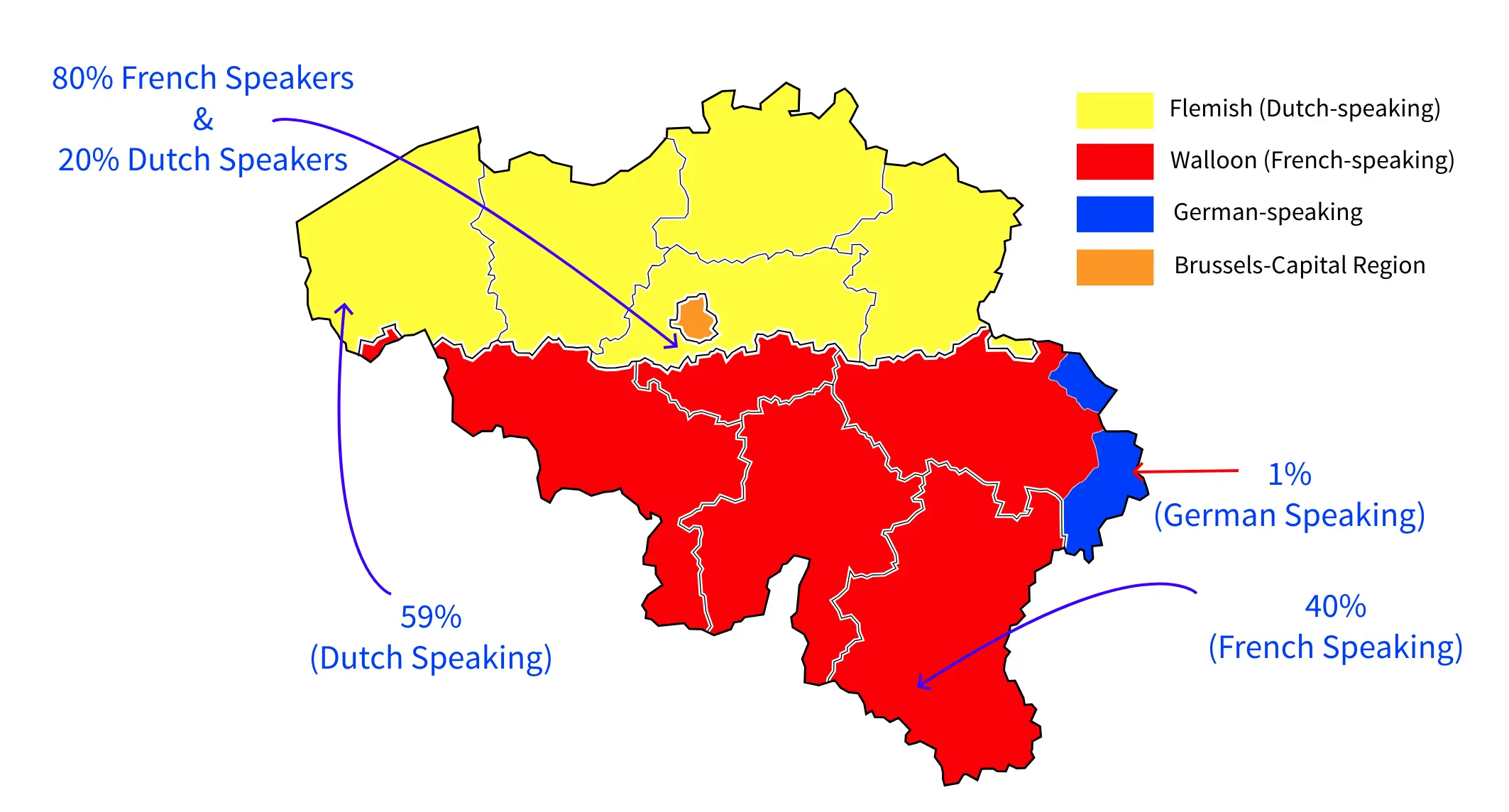
Belgium’s Linguistic Divide
Challenges
The minority French-speaking community was relatively rich and powerful. This resulted in them being resented by the Dutch speakers, since they got the benefits of education and economic development much more.
This led to tensions between the Dutch-speaking and French-speaking communities during the 1950s and 1960s.
The tension between the two communities was more acute in Brussels.
In Brussels the Dutch community which is in majority nationally but was a minority community in the capital.
Solution
An innovative Power-sharing model between 1970 and 1993, they amended their constitution four times so as to work out an arrangement
- Constitutionally mandated equal representation of Dutch and French-speaking ministers in the central government.
- Some laws require the support of majority of members from each linguistic group.
- Powers decentralized to state governments of both the regions. They are not subordinate to the central government.
- Brussels’ has a separate government has equal representation for both communities.
The French-speaking people accepted equal representation in the Brussels government of the Dutch-speaking people, because nationally Dutch-speaking people gave equal representation to them in return.
- Community government manages cultural, educational and language-related issues for Dutch, French, and German-speaking groups.
- This prevented civil strife, maintained national unity and integrity.
Sri Lanka
Geography & Demographics
Population
- It has 74% Sinhala population
- It has a minority Tamil population measuring around 18%.
- Most Sinhala-speaking people are Buddhists. Tamils are mostly Hindus and Muslims.
Tamils divided into:
- The native Sri Lankan Tamils make up 13% of the population.
- The Indian Tamils make up 5% of the population, they are descendants of plantation workers.
The Indian Tamil population lives in the center of Sri Lanka. While the Sri Lankan Tamils live in the northern to north-eastern part of Sri Lanka.
Christians make up 7% of the population, these are both Sinhala and Tamils.
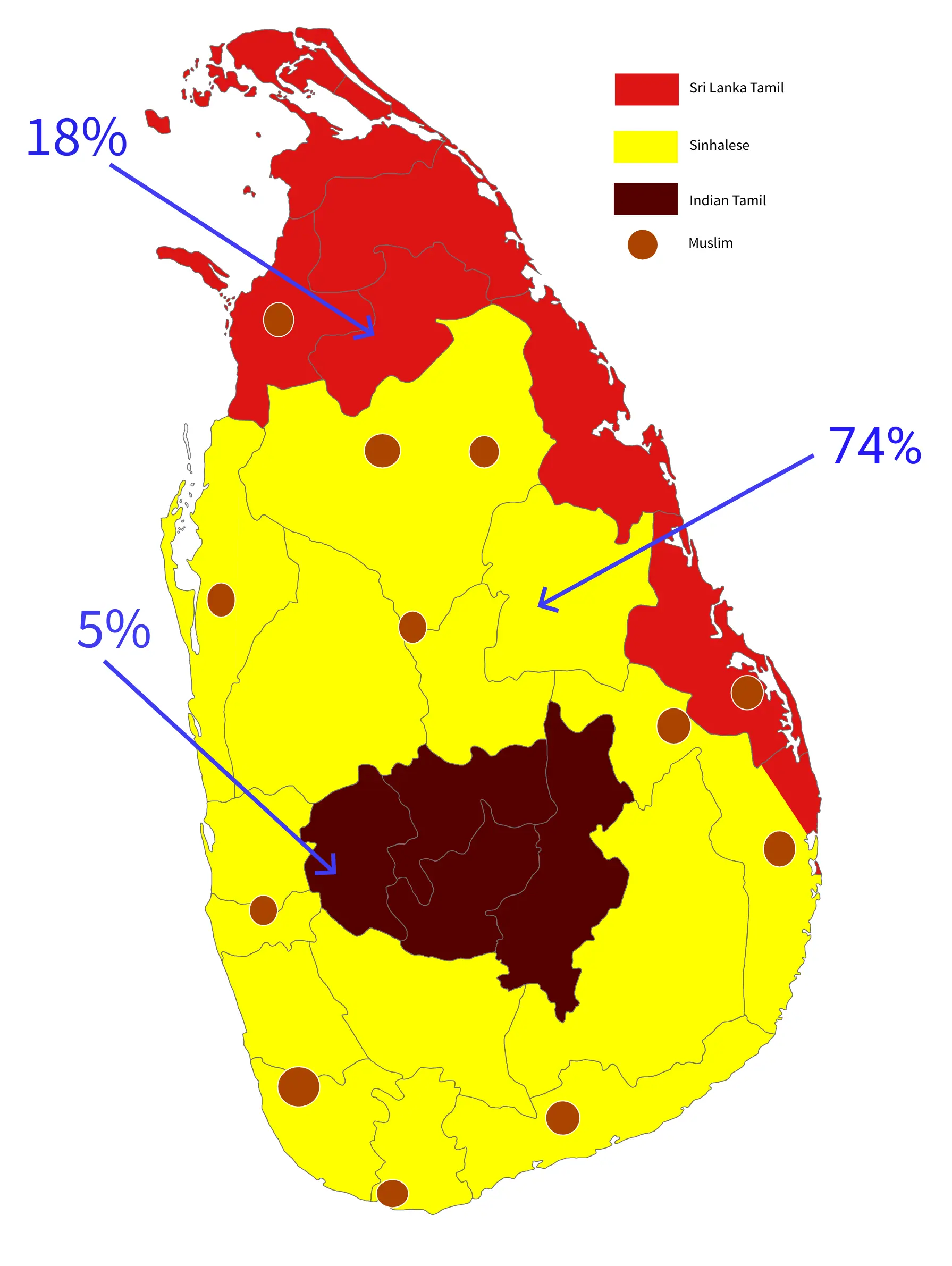
Sri Lanka’s Ethnic Divide
Majoritarianism
Sinhala community enforced policies favoring their dominance
- Sinhala-only Act (1956): Made Sinhala the sole official language. This discriminated against the Tamils, who had a hard time competing in government exams for jobs and education.
- Preferential treatment in education and jobs for Sinhalas.
- Constitution mandated state protection of Buddhism.
- The buddhist, Sinhala leaders weren’t sensitive enough to Tamil demands. Many Tamil parties demanded for more autonomy to provinces populated by the Tamils.
After a repeated attempts of Tamils for getting equal rights, they were forced to demand a separate Tamil sate, the Tamil Eelam.
- This resulted in Tamil alienation, demands for autonomy, leading to a civil war which ended in 2009.
Lessons from Belgium and Sri Lanka
- Belgium: Power-sharing fosters unity by respecting diversity.
- Sri Lanka: Majoritarianism undermines national unity and causes prolonged conflict.
Why Power-sharing
- Prudential Reasons:
- Reduces conflict among social groups.
- Ensures political stability.
- Moral Reasons:
- Upholds democratic principles by involving all groups in governance.
- Promotes legitimacy and inclusivity.
Forms of Power-sharing
Horizontal Distribution:
- Among government organs (legislature, executive, judiciary).
- Example: Checks and balances system.
Vertical Distribution:
- Among different levels of government (central, state, local).
- Example: Federal structure in India.
Social Groups:
- Representation for minorities in governance.
- Example: Reserved constituencies in India, Belgium’s community government.
Political Entities:
- Power-sharing among political parties, pressure groups, and movements.
- Example: Coalition governments.
Lebanon
- Unique power-sharing based on religious sects (e.g., President must be Maronite Christian, Prime Minister Sunni Muslim).
- Criticism: Rigid structure limits merit-based political growth but ensures peace.
Conclusion
- Power-sharing is crucial in democracies to maintain unity, avoid tyranny, and respect diversity.
- It balances prudential needs with moral values.